Guide
Before-You-Call Checklist for a Damaged Wall or Ceiling
A drywall price is only as good as what the finisher hears on the first call. This list pulls the useful facts together in about fifteen minutes. Go through it top to bottom. Safety sits first on purpose.
Switch off power and water first
- Ceiling sagging or dripping? Before you do a thing, trip the breaker serving the overhead fixtures in that room. Water near wiring is the real hazard, not the gypsum.
- Clear the room under a bellied ceiling and park a tub or trash can beneath it.
- For a leaking pipe, close the main water valve. Find it now, while nothing is wet.
- Water coming from the AC closet? Turn cooling off at the thermostat so the coil quits producing water.
Shoot three photos that tell the story
Two or three sharp pictures beat ten fuzzy ones. The wide one places the damage in the room. The close one shows texture and edges.
- Back up and frame the entire wall or ceiling, with a door frame or outlet in view for scale.
- Step in and shoot the damage straight on, by daylight if possible, with the room lights on as well.
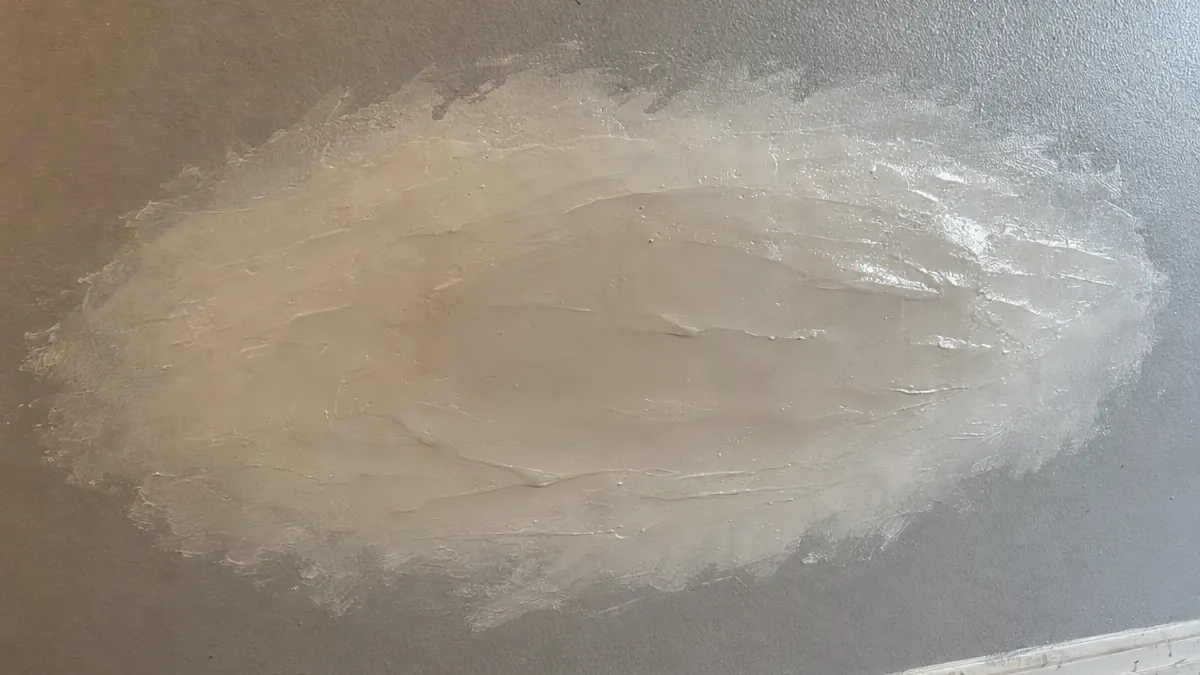
- Hold the phone low and shoot along the wall. Raking light picks out texture, bulges and old patches a head-on picture hides.
- For a stain, also shoot whatever sits above or behind it: the attic, the air handler closet, the upstairs bath.
Measure with any tape you own
Any tape measure will do. Nobody needs sixteenths.
- Width and height of every hole or stained patch.
- Length of every crack, and whether it starts at a door or window corner.
- After a flood, how high the waterline stands off the floor on each wet wall.
- Ceiling height in that room: standard, vaulted or stairwell changes the setup.
Jot the facts a finisher asks for
These are the first questions on any callback. Having the answers ready saves a second round.
- The cause, if known: flood, roof, pipe, AC drain, a door, furniture, settling.
- When the damage showed up, and if the leak or flood source is fixed yet. Drywall goes back last, after the water is shut off for good and the framing is dry.
- About when the house went up. Older houses may hold plaster or thicker board, and for any house older than 1978 the EPA flags lead-based paint as a likely concern.
- The texture name if you know it (popcorn, skip trowel, knockdown, orange peel, or none). A picture usually answers it.
- Paint: yes or no, plus the color off the can lid if handy.
- Any deadline: a move-out walkthrough, a closing date, a listing shoot, a painter already booked.
Note the flood history on low streets
Part of Jacinto City drains to Hunting Bayou, and Houston Public Works says several neighborhoods in that watershed flood even in frequent storms. If water got in, write down every room it reached and how high, even where a wall looks fine. Gypsum wicks water above the visible mark, and a moisture meter often finds wet board well past the stain. The Harris County Flood Control District keeps a record of the county's big floods, Allison in 2001 and Harvey in 2017 among them; if your walls went through one, mention any older repairs you know about.
Pull the furniture off that wall
- Pull furniture, pictures and shelves away from the damaged wall, about three feet where possible.
- Empty the closet under the air handler, or the cabinet under the leak.
- Plan somewhere for pets to be on the day of the work.
With all that ready, the call runs short and the price lands closer to the real job. Next, read up on flood cuts and wet wall repair or how a backed hole patch is built, or jump to the form to ask for a price.
Send the checklist our way
Checklist filled in? Pass it along with your pictures and the finisher rings back.
A finisher who works this area sets the price, and you get the figure while the wall is still untouched.